信拓_1747705273728.webp)
Natural red sandstone slab for Wall Cladding and Outdoor Decoration
2026-07-18 08:10:22
Understanding Natural Red Sandstone Slabs: Characteristics and Applications
Geological Formation and Color Variations
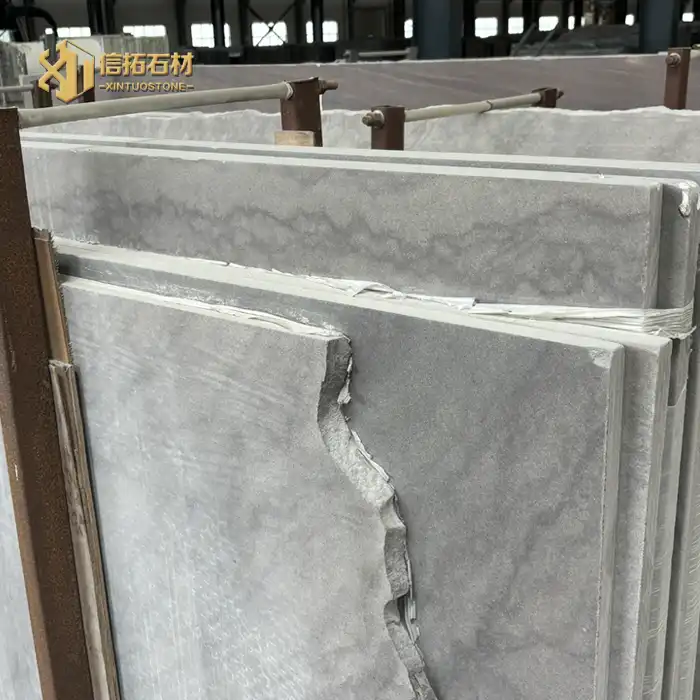
Natural red sandstone slab has a unique look that comes from the minerals that make it up. Red and brown-red colours are caused by iron-containing minerals, especially hematite. Each slab is unique. Unlike materials that are artificially coloured, these colours don't fade when exposed to UV light for a long time, so they will look good for decades. The natural pattern moves slowly across the surface and tells a geological story that was formed over millions of years. When the stone is brushed, it gets a smooth sheen that makes it look more three-dimensional, which makes it a great choice for business facade projects.
Performance in Diverse Climates
Natural red sandstone slab works amazingly well in the wide range of temperatures that can be found in the United States. The naturally porous nature of the material lets it breathe in rainscreen applications, keeping moisture out of the structure so it doesn't become damaged. With a normal water absorption rate of 1.0% to 1.5%, properly sealed slabs handle freeze-thaw cycles well in northern countries and keep heat from expanding in southern ones. The thermal inertia of the stone helps keep building temperatures stable in places from Minnesota to Arizona where it was used.
Commercial and Residential Applications
Natural red sandstone slabs are used by architects to cover the outside walls of commercial buildings because they are non-flammable and don't deteriorate over time. The material is great for historical repair projects because it has a real texture that goes well with old sandstone buildings. For hospitality projects, designers use fragmentation or relief on the background walls of lobby areas. Warm lighting and stone make the spaces feel welcoming. The material is popular with landscape planners for paving courtyards and making public statues because it has cultural meaning and lasts a long time.
How Natural Red Sandstone Slabs Are Made and Maintained
Precision Quarrying and Fabrication Process
Through our own mines in Wulian Stone Industrial Park, Xintuo Stone controls the whole production line. Our three big granite mines provide constant material quality, and our plate production lines, which are equipped with fifty pieces of cutting equipment, make sure that the sizes are accurate to within +/- 1-2 mm. The first step in mining is carefully choosing the layer. Type II and Type III quartzitic Natural red sandstone slabs with high compressive strengths of 70 to 90 MPa are targeted. Diamond wire saws are used for block extraction to keep micro-fracturing to a minimum, which protects the stone's internal integrity.
Once the blocks are out of the ground, they are taken to our processing plants, where gang saws cut them into slabs. We have different thicknesses (15mm, 20mm, and 30mm) to meet different installation needs. For internal uses and light facade systems, thinner slabs work well, while 30 mm width gives heavy-traffic paving the sturdiness it needs. We can make strip slabs, standard slabs, thin slabs, and special cut-to-size fabrication, so we can meet the needs of a wide range of B2B buyers.
Surface Finishing Options
When you finish stone in different ways, it changes how it looks and how well it works. Honed finishes make surfaces that are smooth and matte, which can be used for interior walls and vertical cladding where slip resistance isn't important. Flamed finishes, which are made by putting the surface in a high-temperature flame, make textured surfaces that are great for outdoor flooring. Brushed finishes bring out the natural shine of the stone, giving it the smooth feel that is popular in modern bathrooms for toilet tables. When it comes to slip resistance, natural cleft or shot-blasted finishes are the best. They achieve R11–R13 ratings, which are necessary for public square paving where safety rules are strict.
Maintenance Requirements and Protective Treatments
Natural red sandstone slab projects last a lot longer if they are well taken care of. For regular cleaning, we suggest using pH-neutral cleaners instead of acidic ones that might clash with the stone's bonding matrix. Even though sandstone is mostly made up of silica, strong acids may break down some of the cementing materials in it, like calcite or some iron compounds. Putting on breathable hydrophobic impregnators after installation makes a barrier that keeps water out while letting moisture inside escape, which lowers the risk of efflorescence caused by salt migration. Regular sealing every three to five years keeps the colour and resistance to stains.
Comparing Natural Red Sandstone Slabs with Alternative Materials
Natural Red Sandstone vs. Granite
Natural red sandstone slab from nature vs. granite: Granite is better for high-traffic indoor flooring than sandstone because it is harder on the Mohs scale (6.5-7) and doesn't soak up as much water. But Natural red sandstone slab is easier to work with and costs a lot less, making it perfect for carvings and unique forms. Sandstone's warm, earthy tones make spaces feel welcoming and go well with home and restaurant projects. Granite, on the other hand, looks better in business settings because it is cooler. For wall covering funds, sandstone is usually 30–40% less expensive than high-end granite, but when sealed properly, it has the same weather protection.
Natural Red Sandstone vs. Limestone and Marble
Limestone and marble are examples of calcareous stones that can be damaged by acid rain in cities. The silica content of Natural red sandstone slab makes it more resistant to weathering, which makes it a better choice for outdoor siding in industrial areas where the air is more acidic. The dramatic veining in marble gives it a high-end look, and it usually costs 60–80% more than sandstone. Limestone has neutral, softer tones that aren't as warm as sandstone. For outdoor decorations that are exposed to harsh weather, sandstone lasts longer than marble and limestone without needing as much upkeep.
Natural Red Sandstone vs. Artificial Sandstone
For projects that need to stay within a budget, artificial sandstone composites are a good choice because they have a consistent colour and lower initial costs. These materials, on the other hand, don't have the natural differences in texture and signs of wear and tear that come with real stone. Artificially coloured items fade over time when exposed to UV light, but the natural iron oxide colourants in real rock stay stable. The impact on the earth is also very different. Natural stone doesn't need as much preparation as synthetic stone, which uses a lot of energy to make. A genuine natural red sandstone slab has strong benefits for projects that care about realism and long-term value, even though it costs a little more up front.
Sourcing Natural Red Sandstone Slabs: Procurement Insights for B2B Buyers
Global Supply Chain Considerations
China, especially the region of Shandong, which is where Xintuo Stone is based, makes most of the world's Natural red sandstone slab. Our site in Wulian County is in one of China's biggest stone production bases. This gives us access to better infrastructure that makes foreign shipping easier. With 16 years of experience exporting, we've come up with strong shipping methods that keep products safe while they're in transit. Our export team handles the paperwork needed for easy customs clearance in the US. They do this by working with freight partners who know how to ship stone in containers.
Knowing the wait time helps with planning the buying process. Standard slab orders usually ship 3–4 weeks after the deposit is confirmed. Custom fabrication projects, on the other hand, take 5–6 weeks, depending on how complicated they are. There are a lot of popular finishes and sizes in our inventory, which lets us finish urgent projects faster. Minimum order amounts depend on the standard. Container loads are the most cost-effective way to ship, and a 20-foot container can hold about 500–600 square meters of 20mm slabs.
Quality Assurance and Inspection Protocols
We have strict quality control measures in place that address common worries that B2B buyers have about colour variation and uniformity. At our plant, slabs are set up so that we can see how colours blend and find pieces that have white calcite streaks or black carbon spots that stand out. Every batch goes through a dry lay review. This visual sorting makes sure that installations look good together and don't have any noticeable flaws. Sound testing finds tiny cracks or flaws in the layers of a structure that threaten its stability. We make sure that dimension stone meets ASTM C616 standards by giving test certificates that show physical properties like compressive strength, flexural strength, and water absorption rates.
An advanced check includes tests for moisture sensitivity to find batches that have unstable iron sulphides (pyrite) that could stain facades with rust. This preventative screening keeps expensive fixes from having to be made after installation. Our high-quality paperwork includes clear pictures of the slabs that will be sent with each order. This lets buyers know exactly what they'll get before it ships.
Pricing Structures and Value Optimization
When you buy from Xintuo Stone directly, you skip the markups that happen in traditional distribution channels, which make prices go up. Our low prices come from the fact that we own our own mines and processing plants, which makes our business more efficient. Orders bigger than 1,000 square meters get volume discounts. At 2,500 and 5,000 square meters, the price breaks get even better. Depending on how complicated they are, custom manufacturing services, such as edge treatments like bevelled or bullnose profiles, add 15 to 25 percent to the base block price.
Payment terms usually require a 30% payment and the remaining 70% to be paid when the shipping papers are received. However, repeat customers may be able to negotiate longer terms after getting to know the business. We normally offer FOB Qingdao Port prices, but buyers who would rather have the goods shipped can choose CIF prices instead. Clear quotes include detailed breakdowns of material costs, processing fees, and packaging costs. This way, there are no surprises that make managing a budget harder.
Best Practices for Using Natural Red Sandstone Slabs in Wall Cladding and Outdoor Decoration
Installation Techniques for Wall Cladding
Preparing the substrate correctly is the first step to installing Natural red sandstone slabs for wall cladding that works. To keep water from building up behind stone exterior walls, moisture barriers and drainage planes must be installed. We recommend mechanical anchoring with stainless steel fixings over adhesive-only methods for ventilated façade systems, especially for slabs that are thicker than 20 mm. Anchor spacing is determined by structural engineering estimates that are based on the size of the slab and the wind load needs for the project site. Leaving enough expansion joints—usually 10mm—allows for temperature movement and keeps stress fractures from happening.
The choice of fixing system is based on the height of the building and the conditions of exposure. Epoxy-fixed systems work well for commercial buildings with less than three stories, but they need to be mechanically anchored to meet local building codes for high-rise buildings over 50 feet. We offer expert advice to help buyers choose the right installation methods. We do this by drawing on our experience with projects in a wide range of American climates, from the humid coastal areas to the deserts.
Outdoor Decoration and Paving Applications
When the base is designed correctly, a natural red sandstone slab works great as outdoor flooring. For walkways and patios, we suggest a base of crushed gravel that is at least 6 inches deep and a top layer of 2 inches of sand that lets water drain. Slabs should be put down with small curves (1-2%) that keep water away from buildings. Our brushed or natural cleft finishes make surfaces less likely to slip on slopes of up to 5 percent, which meets ADA requirements for public spaces.
Edge treatments affect both how something looks and how long it lasts. Bevelled edges make it less likely that tiles will chip in places that get a lot of use, and bullnose profiles make pool coping and stair steps look like they have softer lines. For garden walls and raised pots in the landscape, dry-stacked sandstone gives them a natural look, and mortared joints give them stability where they're needed. Because the stone is easy to work with, it can be cut to make curved walls and other artistic features that would be too expensive to make with harder stones.
Weatherproofing and Longevity Strategies
Quality sealing products are the first step in protecting sandstone from environmental stressors. Topical coats that can peel or change colour are not as good at protecting stone as penetrating sealers that bond within the stone's pores. We suggest siloxane or silane-based sealers that are made to work with the way sandstone absorbs things. When you apply something is important. Stone that has just been put should cure for 4 to 6 weeks before it is sealed. This gives any leftover mortar or glue time to dry.
For freeze-thaw protection in northern areas, you need to choose sandstone grades with the right absorption rates and make sure that the sealer covers all of the surface, even the cut edges that are often missed when the sealer is applied. When properly treated, the stone's natural pore structure lets ice expand better than denser materials. This is why it works well in harsh winters in Minnesota, Wisconsin, and other similar places. The iron oxide pigmentation is naturally resistant to UV light, so it doesn't need any extra processes to keep its colour stable after decades of sun exposure.
Conclusion
Natural red sandstone slab represents a smart material choice for B2B buyers looking for dependable quality, original looks, and proven performance in wall siding and outdoor decoration. The material's natural benefits—its UV-stable colour, flexible structure, and resistance to weather—meet important design needs while saving money compared to more expensive options. At Xintuo Stone, we make sure that our products are consistent in a way that smaller suppliers can't, by integrating our operations from hand-picked mines to precise manufacturing. With dimensions that can be changed, a variety of finishing options, and expert technical support, we give importers and distributors all the tools they need to confidently serve the construction market.
FAQ
Does natural red sandstone fade under direct sunlight?
When put in direct sunlight, does a natural red sandstone slab fade? The colour won't change because it comes from hematite, an iron oxide mineral that doesn't break down in UV light. The colour of artificially coloured concrete or manufactured materials fades within 5–10 years. But the look of natural iron oxide stone stays the same for hundreds of years because it is stable as a mineral. Historical buildings made of red sandstone that were built hundreds of years ago show how durable it is by keeping their colour even after being in the sun for years on end.
How does red sandstone compare to brick for exterior cladding?
On the outside, how does a natural red sandstone slab compare to brick? Red sandstone has a wider range of looks than uniform brick because its natural texture changes create visual interest that can't be achieved with uniform brick. The bigger pieces of this material cut down on assembly time and the amount of mortar joints needed compared to brick, which lowers labour costs by a large amount. For load-bearing walls, brick has the best compressive strength. For non-structural covering, sandstone has the same or better weather protection at the same or lower cost. Both types of stone need to be maintained in the same way, but sandstone usually needs to be sealed while brick doesn't.
What customization capabilities do manufacturers offer?
Besides the standard 60x60cm, 80x80cm, and 120x60cm sizes, Xintuo Stone also offers custom sizes for Natural red sandstone slabs that aren't listed above. Custom thicknesses between 10mm and 50mm can be used for a wide range of tasks, from thin-set internal features to heavy-duty industrial floors. You can choose from straight, bevelled, bullnose, and custom cutter profiles for artistic uses when you profile the edges. We also do colour-matched batching for large projects to make sure that the look of multiple production runs stays the same, waterjet cutting for intricate patterns, and CNC milling for relief carvings.
Partner with Xintuo Stone: Your Trusted Natural Red Sandstone Slab Supplier
Every Natural red sandstone slab order from Xintuo Stone is backed by 16 years of export success, a 100-acre factory campus, and three specialised quarries that make sure there is a steady supply. Being the first factory in Wulian Park to have plate production lines gives us technological advantages that help us make better products with better fit and finish. Our 50-piece fleet of cutting tools and experienced technical team can give you exactly what your projects need, whether you need standard slabs to ship right away or custom cut-to-size manufacturing for unique projects.
We know that business-to-business buyers need more than just good items. They also need a partner that can make foreign sourcing easier. When it comes to logistics, our export experts take care of everything, from the rules for plant inspections to shipping in containers and filling out customs paperwork. Get in touch to talk about your unique needs, ask for samples, or get full quotes. Get in touch with us at sales@xintuostone.com to find out how our Natural red sandstone slab maker services can help you stay competitive and meet your clients' most exacting building needs.
References
1. Smith, M.R. & Collis, L. (2001). Aggregates: Sand, Gravel, and Crushed Rock Aggregates for Construction Purposes. Geological Society Engineering Geology Special Publication.
2. Siegesmund, S. & Snethlage, R. (2014). Stone in Architecture: Properties, Durability. Springer-Verlag Berlin Heidelberg.
3. Winkler, E.M. (1997). Stone in Architecture: Properties, Durability. Springer Science & Business Media.
4. Přikryl, R. & Smith, B.J. (2007). Building Stone Decay: From Diagnosis to Conservation. Geological Society Special Publications, London.
5. American Society for Testing and Materials. (2018). ASTM C616-18: Standard Specification for Quartz-Based Dimension Stone. ASTM International.
6. Natural Stone Institute. (2020). Dimension Stone Design Manual VIII. Natural Stone Institute Technical Publications.

Send Inquiry
You may like