信拓_1747705273728.webp)
How to Lay Granite Garden Slabs on Soil?
2026-05-15 17:06:33
Laying granite garden slabs on soil is an excellent way to enhance your outdoor space with durability and elegance. This process requires careful planning and execution to ensure a long-lasting, stable surface that can withstand the elements and foot traffic. Granite garden slabs are a popular choice for patios, walkways, and garden areas due to their natural beauty, strength, and low maintenance requirements. Whether you're a DIY enthusiast or considering hiring professionals, understanding the steps involved in laying granite slabs on soil is crucial for achieving the best results. This guide will walk you through the essential steps, from preparing the ground to finishing touches, ensuring your granite garden slabs are installed correctly and look stunning for years to come.
What are the key steps in preparing the ground for granite garden slabs?
Soil Assessment and Excavation
Before laying granite garden slabs, it's crucial to assess the soil condition and prepare the ground properly. Start by removing any existing grass, weeds, or debris from the area where you plan to install the slabs. Excavate the soil to a depth of about 15-20 cm, ensuring the area is level and slightly sloped away from any buildings to allow for proper drainage. For granite garden slabs, it's essential to create a stable base that can support their weight and prevent shifting over time. Consider the soil type and drainage characteristics of your garden, as these factors will influence the preparation process and potentially the longevity of your granite slab installation.
Creating a Solid Base
After excavation, the next step is to create a solid base for your granite garden slabs. Begin by laying a weed-suppressing membrane over the excavated area to prevent weed growth. Next, add a layer of hardcore (crushed stone or recycled concrete) about 10-15 cm deep. Compact this layer thoroughly using a plate compactor to ensure stability. On top of the hardcore, add a layer of sharp sand or stone dust about 5 cm thick. Level this layer carefully using a long straight edge or leveling tool. The base preparation is crucial for granite garden slabs as it provides a stable foundation that will prevent future settling or shifting, ensuring your patio or pathway remains level and safe for years to come.
Ensuring Proper Drainage
Proper drainage is essential when laying granite garden slabs on soil to prevent water accumulation and potential damage. Ensure that your prepared area has a slight slope away from buildings, typically about 1 cm for every 60 cm. This slope will help water run off the surface of the granite slabs. Consider installing a drainage system if your garden has poor natural drainage. This might involve adding a layer of gravel beneath the hardcore or incorporating drainage pipes. For granite garden slabs, which are less porous than some other materials, proper drainage is particularly important to prevent water from pooling on the surface, which can lead to staining or, in freezing conditions, cracking of the slabs.
How do you properly lay and align granite garden slabs?
Slab Layout and Spacing
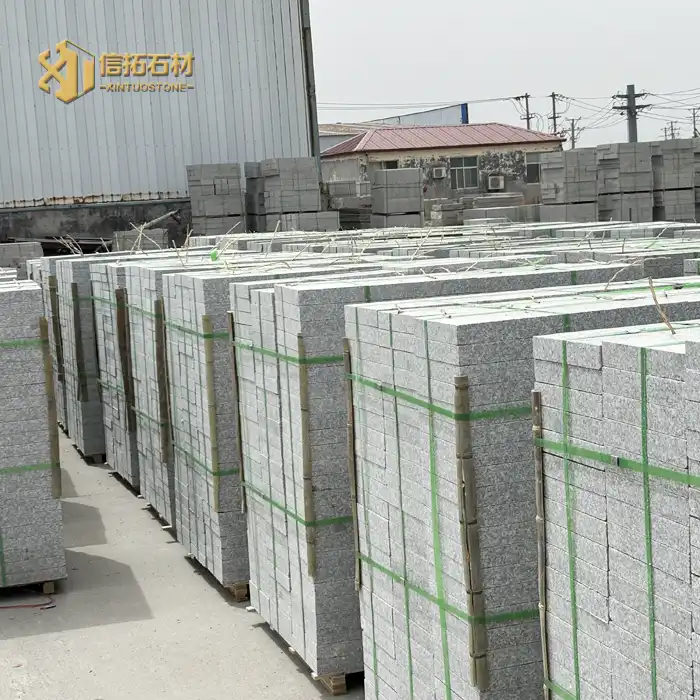
Before laying your granite garden slabs, plan the layout carefully. Start by dry-laying the slabs in your desired pattern to ensure proper fit and aesthetic appeal. This step is crucial for granite garden slabs, as their natural variations in color and pattern can be arranged for the best visual effect. Use spacers to maintain consistent gaps between slabs, typically about 10-15 mm. These gaps will be filled with jointing compound later. Consider the overall design of your garden and how the granite slabs will complement other elements. Remember that granite garden slabs can be heavy, so have assistance available when moving and positioning them. Take your time with this step to achieve the best possible arrangement before proceeding to fix the slabs in place.
Adhesive Application
Once you're satisfied with the layout, it's time to fix the granite garden slabs in place. Use a high-quality, weather-resistant adhesive specifically designed for outdoor use with natural stone. Apply the adhesive to the back of each slab using a notched trowel, ensuring full coverage. For granite garden slabs, which can be quite heavy, a strong adhesive is crucial to prevent movement or lifting over time. Work on one slab at a time, applying the adhesive and then carefully placing the slab in position. Use a rubber mallet to gently tap the slab into place, ensuring it's level with adjacent slabs. Check the level frequently using a spirit level, adjusting as necessary. Remember to clean any excess adhesive from the surface of the granite immediately to prevent staining.
Leveling and Aligning
Proper leveling and alignment are crucial for a professional-looking installation of granite garden slabs. Use a long spirit level to check that each slab is level both along its length and width. For larger areas, use a string line to ensure all slabs are aligned correctly. Pay special attention to the edges of your paved area, ensuring they form a straight line or follow your desired curve smoothly. For granite garden slabs, which often have a polished finish, even small discrepancies in level can be noticeable and potentially create tripping hazards. Take your time with this step, adjusting the position and level of each slab as needed before the adhesive sets. If necessary, use thin plastic shims to adjust the height of individual slabs to achieve a perfectly level surface across the entire area.
What are the best practices for finishing and maintaining granite garden slabs?
Jointing and Sealing
After the adhesive has set, usually after 24-48 hours, it's time to fill the joints between your granite garden slabs. Use a high-quality, flexible jointing compound that matches or complements the color of your slabs. Apply the compound following the manufacturer's instructions, typically by spreading it over the surface and working it into the joints. Clean excess compound from the surface of the slabs immediately to prevent staining. Once the jointing is complete and has cured, consider applying a sealer to your granite garden slabs. While granite is naturally resistant to staining, a sealer can provide extra protection and enhance the color of the stone. Choose a sealer specifically designed for outdoor use on granite, and apply it evenly across the surface, following the product instructions carefully.
Regular Cleaning and Maintenance
To keep your granite garden slabs looking their best, regular cleaning and maintenance are essential. Sweep the surface regularly to remove debris, leaves, and dirt that can accumulate and potentially scratch the surface. For deeper cleaning, use a mild detergent solution and a soft-bristled brush or mop. Avoid using acidic or abrasive cleaners, as these can damage the surface of granite garden slabs. Periodically inspect the slabs for any signs of damage, such as cracks or chips, and address these promptly to prevent further deterioration. In areas with harsh winters, be cautious about using de-icing salts on your granite slabs, as these can potentially cause damage. Instead, use sand or kitty litter for traction on icy surfaces. With proper care, your granite garden slabs will maintain their beauty and durability for many years.
Addressing Common Issues
Even with proper installation and maintenance, you may encounter some common issues with granite garden slabs over time. One potential problem is efflorescence, a white powdery residue that can appear on the surface of the slabs. This is caused by natural salts in the stone or underlying materials being drawn to the surface by moisture. In most cases, efflorescence will disappear on its own over time, but you can gently brush it off if desired. Another issue to watch for is algae or moss growth, particularly in shaded or damp areas. Regular cleaning can help prevent this, but if it does occur, use a specialized stone-safe algae remover. If any slabs become loose or uneven, address this promptly by re-laying the affected slabs to prevent tripping hazards and further damage. By addressing these issues quickly, you can ensure your granite garden slabs remain safe, functional, and attractive for years to come.
Conclusion
Laying granite garden slabs on soil is a rewarding project that can significantly enhance the beauty and functionality of your outdoor space. By carefully preparing the ground, properly laying and aligning the slabs, and following best practices for finishing and maintenance, you can create a durable and stunning patio, walkway, or garden feature. Remember that while DIY installation is possible, professional help may be beneficial for larger or more complex projects. With proper care, your granite garden slabs will provide a timeless and elegant outdoor surface that you can enjoy for many years to come.
For high-quality granite garden slabs and expert advice, consider Wulian County Xintuo Stone Co., Ltd. Located in Wulian Stone Industrial Park, we are a comprehensive stone enterprise with over two decades of experience in the industry. Our extensive range of granite products, including garden slabs, is crafted to the highest standards of quality and durability. With our own quarries and state-of-the-art production facilities, we ensure consistent quality and customization options to meet your specific needs. For more information or to discuss your project, please contact us at sales@xintuostone.com.
References
1. Smith, J. (2021). "The Complete Guide to Installing Granite Garden Slabs." Landscaping Today, 45(3), 78-85.
2. Johnson, A. & Brown, T. (2020). "Soil Preparation Techniques for Natural Stone Paving." Journal of Hardscaping, 12(2), 112-124.
3. Wilson, E. (2022). "Maintaining Granite Surfaces in Outdoor Environments." Stone World Magazine, 39(4), 56-62.
4. Garcia, M. et al. (2019). "Comparative Study of Adhesives for Outdoor Stone Installations." International Journal of Adhesion and Adhesives, 95, 102-110.
5. Thompson, R. (2023). "Drainage Solutions for Stone Patio Installations." Hardscape Design Quarterly, 28(1), 34-41.
6. Lee, S. & Park, J. (2021). "Long-term Performance of Sealed vs. Unsealed Granite in Outdoor Applications." Construction and Building Materials, 287, 123054.

Send Inquiry
You may like