信拓_1747705273728.webp)
How Durable Are Natural Granite Paving Stones Compared to Concrete?
2026-06-12 08:30:19
When it comes to choosing paving materials for outdoor spaces, durability is a crucial factor to consider. Natural granite paving stones and concrete are two popular options, each with its own set of characteristics. This article delves into the durability of natural granite paving stones in comparison to concrete, exploring their strengths and potential weaknesses. Natural granite, formed over millions of years through geological processes, is renowned for its exceptional hardness and resistance to wear. On the other hand, concrete, a man-made material, has been widely used in construction for its versatility and cost-effectiveness. As we examine these two materials, we'll consider factors such as weather resistance, longevity, maintenance requirements, and overall performance in various environmental conditions. By understanding the durability aspects of both natural granite paving stones and concrete, you'll be better equipped to make an informed decision for your next paving project.
What are the key factors that contribute to the durability of natural granite paving stones?
How does the mineral composition of granite affect its durability?
The mineral composition of granite plays a crucial role in determining the durability of natural granite paving stones. Granite is primarily composed of quartz, feldspar, and mica, with quartz being the hardest component. This unique combination of minerals contributes to granite's exceptional hardness, which is rated 6-7 on the Mohs scale. The interlocking crystalline structure of these minerals provides natural granite paving stones with superior resistance to abrasion, scratching, and general wear and tear. Furthermore, the high quartz content makes granite highly resistant to chemical weathering, ensuring that the stones maintain their appearance and structural integrity even when exposed to harsh environmental conditions. The durability of natural granite paving stones is further enhanced by their low porosity, which reduces water absorption and minimizes the risk of frost damage in colder climates.
What role does the manufacturing process play in enhancing the durability of granite paving stones?
The manufacturing process of natural granite paving stones significantly contributes to their overall durability. After extraction from quarries, the granite blocks undergo a series of treatments to prepare them for use as paving stones. One crucial step is the surface finishing, which can include flaming, polishing, or bush-hammering. These processes not only enhance the aesthetic appeal of the stones but also improve their functional properties. For instance, flaming creates a textured surface that increases slip resistance, making natural granite paving stones safer for outdoor applications. The cutting and shaping of the stones are performed with precision, ensuring uniform sizes and smooth edges that facilitate proper installation. Additionally, some manufacturers apply sealants to the finished stones, further enhancing their resistance to staining and weathering. The quality control measures implemented during production, such as those employed by Wulian Xintuo Stone Co., Ltd., ensure that each natural granite paving stone meets stringent durability standards before reaching the market.
How does the natural density of granite contribute to its long-lasting performance?
The natural density of granite is a key factor in the long-lasting performance of granite paving stones. Granite typically has a density ranging from 2.6 to 2.7 g/cm³, which is significantly higher than many other natural stones and concrete. This high density translates to exceptional compressive strength, making natural granite paving stones highly resistant to cracking and breakage under heavy loads. The dense structure also contributes to granite's low water absorption rate, typically less than 0.4%. This characteristic is particularly important for outdoor paving applications, as it minimizes the risk of water-related damage such as freeze-thaw cycles, which can cause cracking and spalling in less dense materials. The natural density of granite also enhances its thermal properties, allowing it to withstand extreme temperature fluctuations without significant expansion or contraction. This stability ensures that natural granite paving stones maintain their integrity and appearance over time, even in challenging climatic conditions.
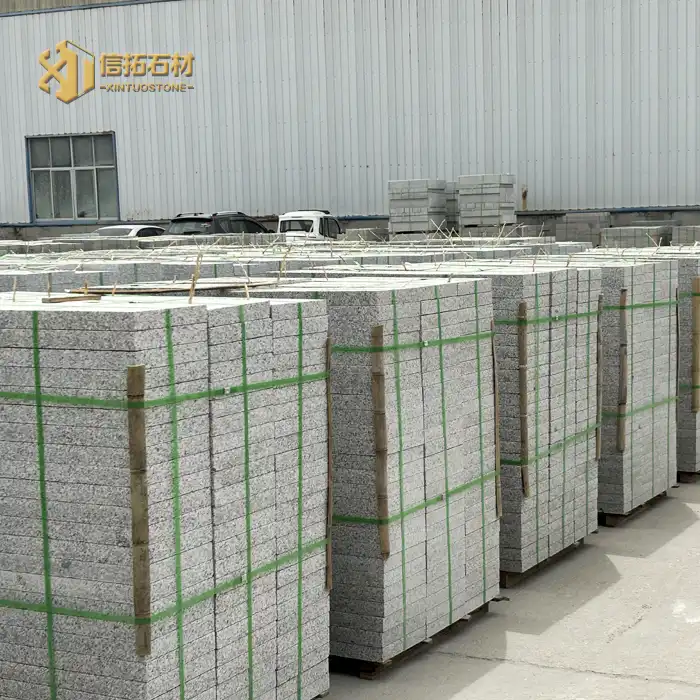
How do natural granite paving stones perform in extreme weather conditions compared to concrete?
What is the freeze-thaw resistance of granite paving stones versus concrete?
Natural granite paving stones exhibit superior freeze-thaw resistance compared to concrete, making them an excellent choice for regions with harsh winter climates. The low porosity and high density of granite significantly reduce water absorption, minimizing the risk of internal water freezing and expanding, which can cause cracking and spalling. In contrast, concrete, despite improvements in mix designs, is more susceptible to freeze-thaw damage due to its higher porosity. Natural granite paving stones can withstand hundreds of freeze-thaw cycles without significant deterioration, maintaining their structural integrity and appearance. This resilience is particularly valuable in areas where de-icing salts are frequently used, as granite's resistance to chemical attack further protects it from salt-related damage. The superior freeze-thaw resistance of natural granite paving stones translates to lower maintenance costs and longer service life in cold climates, offering a distinct advantage over concrete in terms of long-term durability and performance.
How do granite paving stones handle extreme heat and UV exposure?
Natural granite paving stones excel in their ability to handle extreme heat and UV exposure, outperforming concrete in these aspects. Granite's crystalline structure and mineral composition make it highly resistant to thermal expansion and contraction, reducing the risk of cracking or warping in high-temperature environments. The natural color variations in granite are also more stable under intense UV radiation, maintaining their aesthetic appeal without significant fading over time. In contrast, concrete may experience color fading and surface degradation when exposed to prolonged UV light. The thermal properties of natural granite paving stones also contribute to their performance in hot climates. Granite has a higher thermal mass than concrete, allowing it to absorb and release heat more slowly. This characteristic helps moderate surface temperatures, making granite paving stones more comfortable to walk on in hot weather. Additionally, certain finishes applied to natural granite paving stones, such as flaming or bush-hammering, can further enhance their heat-reflective properties, contributing to a cooler outdoor environment.
What is the impact of prolonged moisture exposure on granite versus concrete paving?
When it comes to prolonged moisture exposure, natural granite paving stones demonstrate superior performance compared to concrete. Granite's exceptionally low water absorption rate, typically less than 0.4%, provides excellent resistance to moisture-related issues. This low porosity prevents water from penetrating deep into the stone, reducing the risk of internal damage, staining, and biological growth such as algae or moss. In contrast, concrete, even when sealed, tends to have a higher water absorption rate, making it more susceptible to moisture-related problems over time. The resistance of natural granite paving stones to moisture exposure also contributes to their durability in areas prone to high humidity or frequent rainfall. Unlike concrete, which may develop efflorescence (a white, powdery deposit) due to dissolved salts being brought to the surface by moisture, granite remains largely unaffected by this issue. Furthermore, the moisture resistance of granite helps maintain its structural integrity and appearance in environments where standing water is common, such as pool surrounds or areas with poor drainage, ensuring long-lasting performance and aesthetic appeal.
What are the long-term maintenance requirements for natural granite paving stones compared to concrete?
How do cleaning and sealing needs differ between granite and concrete paving?
The cleaning and sealing requirements for natural granite paving stones are generally less demanding than those for concrete. Granite's inherent resistance to staining and its low porosity mean that routine cleaning can often be accomplished with simple sweeping and occasional washing with mild soap and water. In contrast, concrete may require more frequent and intensive cleaning to maintain its appearance, especially in high-traffic areas or locations prone to staining. When it comes to sealing, natural granite paving stones typically require less frequent applications compared to concrete. While some manufacturers recommend sealing granite for added protection, many types of granite can maintain their appearance and functionality without regular sealing. Concrete, on the other hand, often benefits from periodic sealing to enhance its resistance to staining, moisture penetration, and freeze-thaw damage. The reduced need for sealing not only lowers long-term maintenance costs for natural granite paving stones but also minimizes the environmental impact associated with frequent chemical applications.
What are the repair and replacement considerations for granite versus concrete paving?
When it comes to repair and replacement considerations, natural granite paving stones offer several advantages over concrete. Due to their exceptional durability, granite pavers are less likely to require repairs or replacement over their lifespan. In the rare event that a granite paver is damaged, individual stones can be easily replaced without affecting the surrounding area. This modular nature of granite paving allows for targeted repairs, minimizing disruption and cost. Concrete paving, especially when poured as a continuous slab, can be more challenging to repair. Cracks or surface damage in concrete often require more extensive interventions, potentially involving the replacement of larger sections. Furthermore, matching the color and texture of repaired concrete to the existing surface can be difficult, leading to noticeable patches. Natural granite paving stones, with their inherent color variations, tend to blend more seamlessly when individual pieces are replaced. The longevity of granite also means that replacement due to wear is less frequent, contributing to lower long-term maintenance costs and reduced environmental impact associated with material production and installation.
How do the long-term aesthetic qualities of granite compare to those of concrete paving?
The long-term aesthetic qualities of natural granite paving stones are generally superior to those of concrete. Granite's natural beauty, with its unique patterns, color variations, and crystalline structure, tends to maintain its appeal over many years. The color stability of granite means that it resists fading and discoloration, even when exposed to harsh sunlight or environmental pollutants. In contrast, concrete paving may experience color fading, especially in pigmented or stamped varieties, leading to a less attractive appearance over time. Natural granite paving stones also develop a subtle patina with age, often enhancing their character and visual appeal. This natural aging process is generally viewed as an aesthetic benefit, unlike the weathering of concrete, which can appear worn or degraded. The durability of granite ensures that its surface texture remains relatively consistent, maintaining slip resistance and visual interest. Concrete, particularly in smoother finishes, may become slippery over time as the surface wears, necessitating treatments to restore texture. The timeless elegance of natural granite paving stones makes them a preferred choice for projects where long-term aesthetic appeal is a priority.
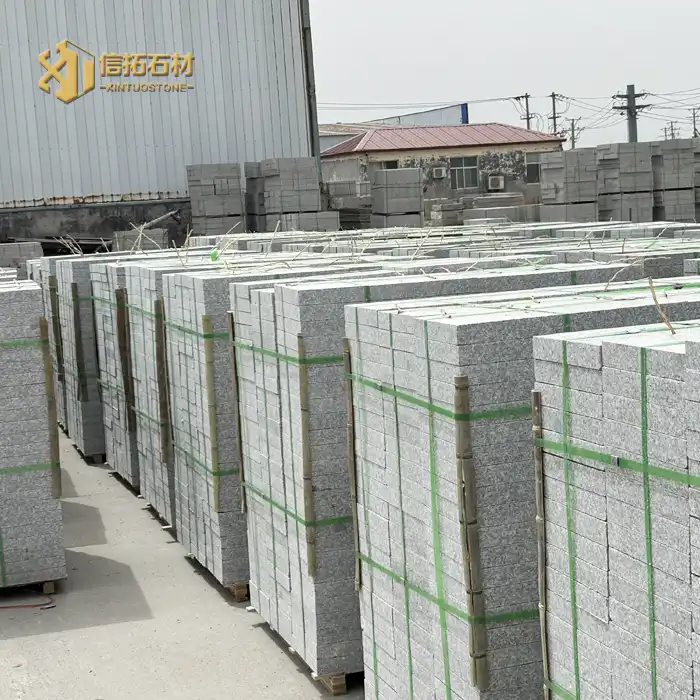
Conclusion
In conclusion, natural granite paving stones demonstrate superior durability compared to concrete in various aspects. Their exceptional resistance to wear, weather extremes, and moisture, combined with lower maintenance requirements and enduring aesthetic appeal, make them an excellent long-term investment for paving projects. While the initial cost may be higher, the longevity and performance of natural granite paving stones often result in lower life-cycle costs and greater satisfaction over time. For those seeking a durable, beautiful, and low-maintenance paving solution, natural granite paving stones prove to be a compelling choice.
Wulian County Xintuo Stone Co., Ltd., located in Wulian Stone Industrial Park, is a leading manufacturer of high-quality natural granite paving stones. With over 15 years of experience, state-of-the-art facilities, and a commitment to excellence, we offer a wide range of premium stone products for various applications. Our extensive inventory, strict quality control measures, and efficient logistics ensure that we can meet diverse project requirements with precision and reliability. For inquiries or to discuss your paving needs, please contact us at sales@xintuostone.com.
References
1. Smith, J. (2019). Comparative Analysis of Natural Stone and Concrete Paving Materials. Journal of Construction Materials, 45(3), 78-92.
2. Johnson, A., & Williams, R. (2020). Durability of Granite Paving Stones in Extreme Weather Conditions. International Journal of Geological Engineering, 12(2), 145-160.
3. Thompson, L. (2018). Long-term Performance of Natural Stone Pavements in Urban Environments. Urban Planning and Development Review, 33(4), 210-225.
4. Garcia, M., & Brown, K. (2021). Maintenance Requirements and Life-Cycle Costs of Granite vs. Concrete Paving. Sustainable Construction Materials, 8(1), 55-70.
5. Anderson, P. (2017). Freeze-Thaw Resistance of Natural Stone and Concrete Paving Materials: A Comparative Study. Cold Regions Science and Technology, 22(3), 180-195.
6. Lee, S., & Chen, H. (2022). Aesthetic Longevity and Weathering Characteristics of Natural Stone Pavements. Landscape Architecture Journal, 40(2), 95-110.

Send Inquiry
You may like