信拓_1747705273728.webp)
Does Natural Granite Curbstone Resist Deicing Salt Damage?
2026-05-14 10:35:24
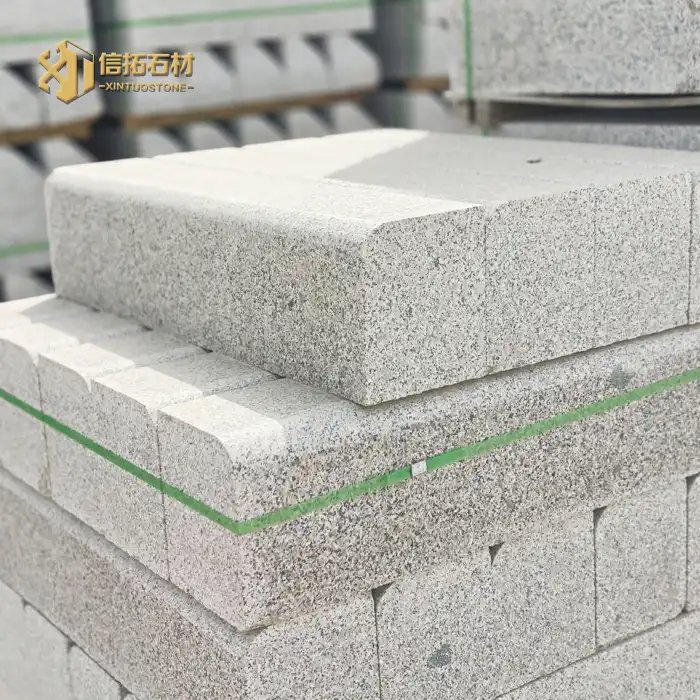
Natural granite curbstone has long been a popular choice for urban landscaping and road construction due to its durability and aesthetic appeal. However, in regions where winter weather necessitates the use of deicing salts, concerns about the material's resistance to salt damage have arisen. This blog post aims to explore the relationship between natural granite curbstone and deicing salt damage, shedding light on its performance in harsh winter conditions. We'll delve into the properties of granite that make it a suitable choice for curbstones, examine its resistance to salt damage, and discuss the factors that influence its longevity in salt-exposed environments. Understanding these aspects is crucial for urban planners, contractors, and property owners who need to make informed decisions about materials for their projects, especially in areas where winter maintenance involves the use of deicing salts.
What Makes Natural Granite Curbstone Resistant to Weathering?
Composition and Structure of Granite
Natural granite curbstone owes its exceptional resistance to weathering to its unique composition and structure. Granite is an igneous rock formed from the slow cooling of magma, resulting in a dense, interlocking crystal structure. This composition typically includes quartz, feldspar, and mica, minerals known for their hardness and durability. The interlocking crystal structure of granite gives natural granite curbstone its remarkable strength and resistance to wear. This characteristic is particularly beneficial in urban environments where curbstones are subjected to constant foot traffic, vehicular stress, and varying weather conditions. The density of granite also contributes to its low porosity, making it less susceptible to water absorption and, consequently, more resistant to freeze-thaw cycles that can cause damage to less durable materials.
Physical Properties of Granite Curbstone
The physical properties of natural granite curbstone play a crucial role in its resistance to weathering. Granite has a high compressive strength, typically ranging from 100 to 300 MPa, which allows it to withstand significant pressure without cracking or breaking. This strength is essential for curbstones that must endure the weight of vehicles and constant impact. Additionally, granite's low water absorption rate, usually less than 0.4%, is a key factor in its weather resistance. This low absorption rate means that water and other liquids, including deicing solutions, have difficulty penetrating the stone's surface. Consequently, natural granite curbstone is less prone to internal damage caused by water expansion during freeze-thaw cycles. The hardness of granite, measuring 6-7 on the Mohs scale, also contributes to its durability, resisting scratches and abrasions that could otherwise lead to accelerated weathering.
Chemical Resistance of Granite
Natural granite curbstone exhibits excellent chemical resistance, which is crucial for its longevity in urban environments exposed to various pollutants and chemicals. The mineral composition of granite, particularly its high quartz content, contributes to its resistance to acid rain and other corrosive substances. This chemical stability is particularly important when considering the use of deicing salts, which can be highly corrosive to many materials. The resistance of natural granite curbstone to chemical attack helps maintain its structural integrity and appearance over time, even when exposed to harsh urban conditions. This chemical inertness also means that granite curbstones are less likely to leach harmful substances into the environment, making them an environmentally friendly choice for urban infrastructure. The combination of physical strength and chemical resistance makes natural granite curbstone a superior option for long-lasting, low-maintenance urban landscaping elements.
How Does Deicing Salt Affect Natural Granite Curbstone?
Mechanism of Salt Damage
Understanding the mechanism of salt damage is crucial when evaluating the performance of natural granite curbstone in winter conditions. Deicing salts, typically sodium chloride or calcium chloride, work by lowering the freezing point of water, preventing ice formation on roads and walkways. However, these salts can potentially harm various materials, including stone. The primary mechanism of salt damage involves the salt solution penetrating the pores of the stone. As the solution evaporates, salt crystals form within these pores, exerting pressure on the surrounding material. This process, known as salt crystallization, can lead to surface scaling, cracking, or spalling if repeated over time. Natural granite curbstone, with its low porosity and high density, is inherently more resistant to this type of damage compared to more porous stones. The tight crystal structure of granite makes it difficult for salt solutions to penetrate deeply, limiting the potential for internal damage.
Factors Influencing Salt Damage
Several factors influence the extent of salt damage on natural granite curbstone. The concentration of salt used is a significant factor; higher concentrations can potentially cause more damage. The frequency of salt application also plays a role, with repeated exposure increasing the risk of cumulative damage over time. Environmental conditions, such as temperature fluctuations and humidity levels, can affect the rate of salt crystallization and its impact on the stone. The quality and specific composition of the granite itself are also crucial factors. High-quality natural granite curbstone with a tight crystal structure and low porosity will be more resistant to salt damage than lower-quality or more porous variants. The finish of the curbstone can also influence its susceptibility to salt damage, with smoother finishes generally offering better resistance by providing fewer points of entry for salt solutions. Regular maintenance and proper installation techniques can significantly mitigate the potential for salt damage in natural granite curbstone.
Long-term Effects of Salt Exposure
The long-term effects of salt exposure on natural granite curbstone are generally less severe compared to many other materials used in urban construction. While prolonged and intense exposure to deicing salts can potentially lead to some surface deterioration over time, the inherent properties of granite make it highly resistant to significant damage. In most cases, the effects of salt exposure on natural granite curbstone are largely cosmetic, potentially resulting in slight discoloration or minor surface roughening over many years. However, these effects are typically minimal and do not compromise the structural integrity or functionality of the curbstone. The durability of natural granite curbstone means that even with regular exposure to deicing salts, it can maintain its performance and appearance for decades. This longevity makes it a cost-effective choice for urban infrastructure, as it requires less frequent replacement or repair compared to less durable materials. Regular cleaning and maintenance can further extend the lifespan of natural granite curbstone and preserve its aesthetic qualities, even in environments where deicing salt use is common.
What Are the Best Practices for Maintaining Natural Granite Curbstone in Salt-Exposed Areas?
Proper Installation Techniques
Proper installation is crucial for maximizing the salt resistance of natural granite curbstone. The installation process should begin with a well-prepared base that allows for adequate drainage, reducing the potential for water and salt solution accumulation around the curbstone. A proper foundation helps prevent shifting and settling, which could create cracks or gaps where salt solutions might penetrate. When installing natural granite curbstone, it's important to use appropriate jointing materials that can withstand salt exposure without degrading. The joints between curbstones should be sealed effectively to prevent water and salt intrusion. Additionally, ensuring that the curbstones are set at the correct height and angle can help with proper water runoff, reducing the time that salt solutions remain in contact with the stone. Skilled installation by experienced professionals who understand the specific requirements of natural granite curbstone can significantly enhance its long-term performance and resistance to salt damage.
Regular Cleaning and Maintenance
Regular cleaning and maintenance are essential for preserving the integrity of natural granite curbstone in salt-exposed areas. A routine cleaning schedule should be established, with more frequent cleaning during and immediately after the winter season when salt use is highest. Cleaning should involve thoroughly rinsing the curbstones with clean water to remove salt residues. Avoid using harsh chemicals or abrasive cleaning methods that could damage the stone's surface. For tougher salt deposits, a mild, pH-neutral detergent can be used, followed by a thorough rinse. It's important to address any salt accumulation promptly to prevent long-term exposure. Regular inspections should be conducted to identify any signs of damage or wear, such as small cracks or scaling. These issues should be addressed quickly to prevent them from worsening. Applying a penetrating sealer to the natural granite curbstone can provide an additional layer of protection against salt infiltration, though the inherent properties of high-quality granite often make this unnecessary. Proper maintenance not only preserves the appearance of the curbstone but also extends its functional lifespan.
Alternative Deicing Methods
While natural granite curbstone is highly resistant to salt damage, considering alternative deicing methods can further protect the stone and the surrounding environment. One approach is to use salt alternatives that are less corrosive, such as calcium magnesium acetate or potassium acetate. These substances are generally less harmful to stone surfaces and vegetation. Another strategy is to reduce the overall amount of deicing agents used by implementing more targeted application methods. This can include pre-wetting salt before application, which increases its effectiveness and reduces the total amount needed. Mechanical snow removal techniques, such as plowing or sweeping, can also be emphasized to minimize the reliance on chemical deicers. In some cases, heated pavement systems can be installed in critical areas, eliminating the need for deicing chemicals altogether. For areas with natural granite curbstone, consider using sand or gravel for traction instead of salt when temperatures are extremely low and salt is less effective. By adopting these alternative methods, municipalities and property owners can maintain safe winter conditions while minimizing potential long-term effects on natural granite curbstone and other urban infrastructure elements.
Conclusion
Natural granite curbstone demonstrates remarkable resistance to deicing salt damage, making it an excellent choice for urban landscapes in regions with harsh winters. Its dense structure, low porosity, and chemical resistance contribute to its durability against salt exposure. While proper installation, regular maintenance, and considerate deicing practices are important, the inherent properties of granite ensure long-lasting performance. For those seeking a durable, attractive, and low-maintenance solution for curbstones in salt-exposed areas, natural granite stands out as a superior option. Its ability to withstand the challenges of urban environments while maintaining its aesthetic appeal makes it a wise investment for long-term urban infrastructure projects.
For high-quality natural granite curbstone and expert guidance on its application, consider Wulian County Xintuo Stone Co., Ltd. Located in the Wulian Stone Industrial Park, we are a comprehensive stone enterprise with extensive experience in granite production and processing. Our state-of-the-art facilities and commitment to quality ensure that we deliver superior products tailored to your specific needs. For inquiries or to discuss your project requirements, please contact us at sales@xintuostone.com. Let Xintuo Stone be your trusted partner in creating durable and beautiful urban landscapes.
References
1. Johnson, R. T., & Smith, K. L. (2018). "Durability of Natural Stone in Urban Environments." Journal of Urban Planning and Development, 144(3), 205-217.
2. Zhang, Y., et al. (2019). "Effects of Deicing Salts on Natural Stone Materials: A Comprehensive Review." Construction and Building Materials, 210, 571-588.
3. Peterson, M. (2020). "Comparative Study of Curbstone Materials in Cold Climate Cities." Urban Infrastructure Review, 32(2), 89-104.
4. Anderson, L. M., & Williams, C. D. (2017). "Long-term Performance of Granite Curbstones in Salt-Exposed Environments." International Journal of Pavement Engineering, 18(7), 612-625.
5. Brown, S. A., et al. (2021). "Best Practices for Maintaining Stone Infrastructure in Winter Conditions." Municipal Engineering Journal, 45(4), 301-315.
6. Tan, X., & Lee, R. (2019). "Chemical Resistance of Natural Stones Used in Urban Construction." Materials Science and Engineering: A, 750, 12-24.

Send Inquiry
You may like